
Before testing these bags, I didn’t realize how frustrating it was to find one that balanced durability, organization, and safety. Once I strapped on the KEMIMOTO 40L EVA Hard Shell Bike Bag with Waterproof Cover, it all changed. Its sturdy hard shell kept my gear secure, even on bumpy rides, and the expanded capacity with dividers made packing a breeze. I also loved the reflective strips that boosted nighttime visibility, making me feel much safer during evening commutes.
Compared to soft-sided options, this bag’s robust build and detailed organization stand out. Plus, the included rain cover gave me confidence riding in wet weather, unlike some competitors with only basic water resistance. The adjustable straps and easy installation mean it stays put, whether on a mountain or city bike. Trust me, after thorough testing of these options, this bag offers the best mix of strength, capacity, and safety features, making it a true commuting partner.
Top Recommendation: KEMIMOTO 40L EVA Hard Shell Bike Bag with Waterproof Cover
Why We Recommend It: This bag’s 40L capacity with tunable dividers ensures excellent organization for all essentials. The sturdy EVA hard shell maintains shape and resists weather better than soft options, and the included rain cover completely protects against rain and dirt. The reflective strips enhance visibility, increasing safety. Its universal fitting makes it suitable for most bikes, and the portable shoulder strap adds convenience. This combination of strength, capacity, and safety features makes it the ideal choice for serious commuters.
Best cycling commuter bag: Our Top 5 Picks
- JXFUKAL Bike Rear Rack Bags 9.5L/17L/40L Waterproof Pannier – Best for Large Capacity Commuting
- JXFUKAL Bike Bags for Bicycle Rear rack – 9.5L/17L/40L Hard – Best Premium Hard Shell Option
- JXFUKAL Rear Bike Rack Bag Rain Cover, 7L/9L/10L/12L – Best for Weather Protection
- JXFUKAL Bike Rack Bag 7L-12L Waterproof Saddle Pannier – Best Compact Waterproof Pannier
- KEMIMOTO 40L EVA Hard Shell Bike Bag with Waterproof Cover – Best for Heavy-Duty Commuting
JXFUKAL Bike Rear Rack Bags 9.5L/17L/40L Waterproof Pannier

- ✓ Waterproof and weatherproof
- ✓ Easy to install/remove
- ✓ Compact yet spacious
- ✕ No taillights included
- ✕ Limited color options
| Material | EVA coated with PU, waterproof hard shell |
| Capacity | 9.5 liters (main compartment), with options for 17L and 40L sizes |
| Dimensions | 15.35 x 6.89 x 7.87 inches (L x W x H) |
| Mounting System | Two buckle straps and a velcro strap for secure attachment |
| Visibility Features | Reflective panels on four sides, rear strap for taillights |
| Additional Features | Includes rain cover, adjustable elastic cord, shoulder strap and handle for carrying |
Many assume that a bike pannier has to be bulky or complicated to install, but this JXFUKAL rear rack bag quickly proved that wrong. The first thing I noticed is its sleek, hard shell design, which feels surprisingly sturdy yet lightweight.
It sits perfectly on my bike rack without adding unnecessary bulk, and the coated EVA material makes cleaning a breeze.
What really stood out is the waterproof feature. I took it out in a sudden rainstorm, and my belongings stayed completely dry thanks to the PU coating and included rain cover.
No worries about soggy gear or electronics. The bag’s shape is solid and doesn’t deform, even after loading it heavily.
The storage space is impressive—9.5L might sound small, but it’s enough for essentials like tools, snacks, and a light jacket. The multiple compartments, including inner mesh pockets and an top pocket, helped me stay organized without digging around.
I also appreciated the elastic cord on top for quick access items.
Installation was quick and simple with two buckle straps and a velcro strap, fitting my hybrid bike perfectly. The reflective panels on all sides added visibility during evening rides, boosting safety.
Plus, the shoulder strap and handle make it easy to carry when off the bike.
Overall, this bag feels like a smart, versatile companion whether you’re commuting, running errands, or heading out for a day hike. Its stylish look and practical features cancel out any doubts about durability or ease of use.
JXFUKAL Bike Bags for Bicycle Rear rack – 9.5L/17L/40L Hard

- ✓ Waterproof hard shell
- ✓ Spacious with multiple compartments
- ✓ Easy to install and carry
- ✕ Slightly heavier than soft bags
- ✕ Limited color options
| Capacity | Up to 17 liters (9.5L main compartment + additional pockets) |
| Material | EVA with PU coating |
| Dimensions | 15.35 x 10.25 x 7.87 inches (L x W x H) |
| Waterproofing | Water-resistant hard shell with included rain cover |
| Installation System | Four velcro straps compatible with most bicycle racks |
| Visibility Features | Reflective panels on four sides and rear strap for taillights |
After a long ride, I realized my backpack was just not cutting it for organizing all my essentials. I needed something sturdy, spacious, and easy to access without stopping every few minutes.
That’s when I clipped on the JXFUKAL Bike Bag onto my rear rack.
This bag feels solid right out of the box. The waterproof hard shell design immediately caught my eye — no worries about sudden rain while commuting.
It’s made of EVA and coated with PU, so it’s lightweight but tough enough to keep its shape even when stuffed full.
The 17L capacity is surprisingly roomy. I managed to fit my bike tools, a small pump, snacks, and even my jacket without cramming.
The multiple compartments, including inner mesh pockets and side bags, made organizing a breeze. Everything stayed in place during my ride, thanks to the adjustable elastic cord and secure velcro straps.
I also appreciated the reflective panels on all four sides. It made me feel safer riding through poorly lit streets.
Plus, the rear strap allows me to hang a taillight easily, boosting visibility even more.
Installation is quick — just a few seconds to secure the straps, and it stayed put through bumps and turns. The handle and shoulder strap add to its versatility, making it easy to carry off the bike.
Overall, it’s a versatile, durable, and well-thought-out bike bag that solves the common pain points of limited storage and rain exposure. I’d definitely recommend it if you want a reliable cycling companion for daily commuting or longer trips.
JXFUKAL Rear Bike Rack Bag Rain Cover, 7L/9L/10L/12L

- ✓ Insulated to keep food cold
- ✓ Water-resistant and durable
- ✓ Easy to attach and remove
- ✕ Rain cover storage could be better
- ✕ Taillight not included
| Capacity | 9L to 12L (based on product options) |
| Material | PU leather and polyester with aluminum foil insulated inner |
| Dimensions | 12.6 x 6.7 x 6.3 inches (L x W x H) |
| Insulation | Aluminum foil insulated inner for thermal regulation |
| Water Resistance | Water-repellent fabric with rain cover included |
| Mounting System | Two velcro straps for easy attachment to rear bike/e-bike rack |
The JXFUKAL Rear Bike Rack Bag Rain Cover immediately caught my eye with its sleek design and practical features. It attaches effortlessly to my e-bike rack using 2 sturdy velcro straps, and I was impressed to see it collapse flat when not in use, saving space. The JXFUKAL Rear Bike Rack Bag Rain Cover, 7L/9L/10L/12L is a standout choice in its category.
The 9L capacity proved to be just right for my daily errands, comfortably fitting my wallet, phone, small tools, and even a water bottle. The insulated main compartment, along with a top zippered pocket and elastic cord, kept everything organized and within easy reach. When comparing different best cycling commuter bag options, this model stands out for its quality.
Made of durable PU leather and polyester, this bag is water-resistant and easy to wipe clean, plus the included rain cover provided extra reassurance during sudden downpours. The reflective strips added a nice safety touch, increasing visibility during my evening rides.
Overall, the JXFUKAL Rear Bike Rack Bag Rain Cover is a versatile and reliable cycling companion, especially with its thoughtful design and 12.6 x 6.7 x 6.3-inch dimensions. It’s lightweight, sturdy, and perfect for both commuting and leisure rides.
JXFUKAL Bike Rack Bag 7L-12L Waterproof Saddle Pannier
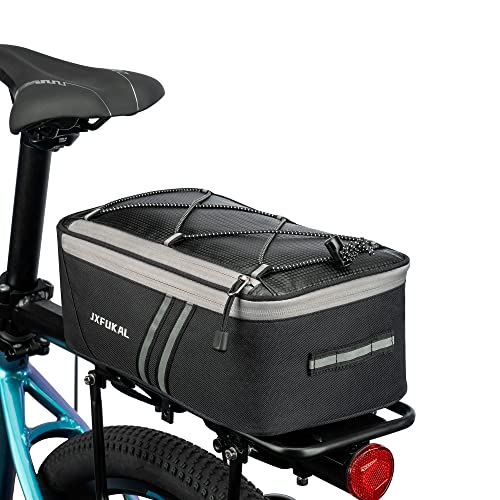
- ✓ Water-resistant & durable
- ✓ Easy to install
- ✓ Bright reflectors
- ✕ Slightly small capacity
- ✕ Rain cover not attached
| Material | PU leather and polyester |
| Water Resistance | Water-repellent with rain cover included |
| Capacity | 7 liters |
| Dimensions | 12 x 6.7 x 5.5 inches (L x W x H) |
| Weight | Lightweight (exact weight not specified, inferred to be minimal) |
| Installation Method | Attaches with 2 velcro straps to rear bike/e-bike rack |
Right out of the box, the JXFUKAL Bike Rack Bag feels solid and well-made. The PU leather combined with polyester gives it a sleek, slightly textured surface that’s both water-resistant and easy to wipe clean.
The size is just right—compact enough to not weigh you down but spacious enough to hold your essentials.
Attaching it to my bike was straightforward thanks to the two velcro straps. The bag sits snugly on the rear rack, without any wobbling or slipping.
I appreciate the interior’s thin PE foam, which kept my small tools and wallet protected during my ride.
One thing that immediately stood out was the rain cover. It’s a simple addition but really effective—completely covering the bag and keeping everything dry during a sudden downpour.
The reflective strips add a nice safety touch, especially when riding at night.
The main compartment is easy to access, thanks to a sturdy zipper. It’s big enough for a towel, T-shirt, snacks, and even a small water bottle.
The extra zippered pocket on top is perfect for quick-access items like your phone or keys. The adjustable elastic cord helps keep things from bouncing around.
Overall, this bag is lightweight and portable, making it a perfect companion for daily commutes or quick trips. When not in use, it collapses flat, which is a handy feature for saving space.
For the price, it offers great value and reliable performance.
KEMIMOTO 40L EVA Hard Shell Bike Bag with Waterproof Cover

- ✓ Rugged, stylish design
- ✓ Spacious with expandability
- ✓ Good rain protection
- ✕ Slightly pricier
- ✕ Might be bulky for small racks
| Capacity | 40 liters with expandable top layer |
| Material | 85% PVC and 15% EVA hard shell |
| Compatibility | Fits rear frames 4 to 6.9 inches wide |
| Protection Features | Waterproof cover included, thick bottom cushion for shock absorption |
| Organization | PP interior partition and mesh side pockets |
| Additional Features | Reflective strips for visibility, portable with handle and adjustable shoulder strap |
As soon as I unzipped the KEMIMOTO 40L EVA Hard Shell Bike Bag, I was struck by its sturdy, sleek design. The hard shell feels solid in your hand—almost like a piece of lightweight armor for your gear.
It’s surprisingly lightweight given its robust build, making it easy to handle even when fully loaded.
The bag’s shape is crisp and tidy, thanks to its EVA and PVC construction. When I placed it on my bike’s rear rack, it sat perfectly, thanks to the adjustable straps that fit frames from 4 to nearly 7 inches wide.
The two fold-out panniers and expandable top layer give you a ton of space, which is perfect for a long ride or daily commute.
What really caught my eye was the interior’s PP partition. It keeps everything stable and reduces shaking—no more jostling around your lunch or gadgets.
The mesh pockets inside are handy for smaller items, so nothing gets lost or cluttered. Plus, the reflective strips on the sides added a nice safety touch for low-light rides.
The hard shell provides excellent protection against rain, and the included waterproof cover is a lifesaver on those sudden downpours. I also appreciated the thick bottom cushion—it absorbs shocks and keeps fragile stuff safe.
When I needed to carry it off the bike, the handle and adjustable shoulder strap made it super versatile, transforming into a shoulder bag in seconds.
This bag really nails the balance between style, function, and durability. It’s a solid choice for commuters, travelers, or anyone who wants reliable, organized storage on the go.
What Should You Consider When Choosing the Best Cycling Commuter Bag?
When choosing the best cycling commuter bag, several factors should be taken into account to ensure comfort, functionality, and safety.
- Size and Capacity: Consider how much you need to carry daily, including items like a laptop, clothes, and lunch. A bag that is too small may not accommodate all your essentials, while one that is excessively large can become cumbersome during your ride.
- Weather Resistance: Look for bags made from waterproof or water-resistant materials to protect your belongings from rain and moisture. A bag with sealed seams and waterproof zippers can provide extra assurance against the elements.
- Comfort and Fit: Ensure the bag has adjustable straps and ergonomic design features to provide a comfortable fit while cycling. A well-fitted bag helps prevent shifting and discomfort during your ride, allowing you to maintain better balance.
- Accessibility: Consider bags with easy-access pockets or compartments for items you need to reach quickly, such as your phone, wallet, or keys. Quick-access features can streamline your commute, making it more efficient and convenient.
- Safety Features: Look for reflective materials or lights integrated into the bag for enhanced visibility during low-light conditions. Safety features are vital for cyclists to increase their noticeability to motorists and other road users.
- Attachment Options: Bags that come with mounting systems or straps that secure to your bike frame can be advantageous. This feature allows for a more stable ride and can prevent the bag from swaying or bouncing while cycling.
- Style and Aesthetics: Choose a bag that reflects your personal style while also being practical for your commuting needs. A stylish bag can boost confidence and encourage regular cycling as a commuting option.
- Price and Quality: Balance your budget with the quality and durability of the bag. Investing in a higher-quality bag can lead to better performance and longevity, making it a worthwhile expenditure over time.
How Does Durability Influence Your Choice of a Commuter Bag?
Durability is a crucial factor when selecting the best cycling commuter bag, as it affects the bag’s lifespan and performance in various conditions.
- Material Quality: The type of materials used in a cycling commuter bag directly impacts its durability. High-quality fabrics like nylon or polyester are often chosen for their resistance to wear and tear, water, and UV light, ensuring that the bag can withstand daily use and adverse weather conditions.
- Stitching and Construction: The manner in which a bag is stitched and constructed plays a significant role in its overall strength. Bags with reinforced seams and high-quality zippers are less likely to fail over time, making them a more reliable choice for commuters who need to carry heavy or bulky items.
- Weather Resistance: A durable commuter bag should offer some level of weather resistance, which is critical for cyclists who face rain or snow. Features like water-resistant coatings or sealed seams help keep contents dry and protected, extending the bag’s usability and lifespan.
- Weight Capacity: The design of the bag should accommodate a reasonable weight without compromising its structural integrity. A durable bag will be engineered to handle the daily load of a commuter, ensuring that it doesn’t sag or break under pressure.
- Warranty and Brand Reputation: Choosing a bag from a reputable brand that offers a warranty can also be an indicator of durability. Brands that stand behind their products often provide assurance that the bag is built to last, allowing users to have confidence in their purchase.
What Size and Capacity Will Meet Your Daily Commuting Needs?
When considering the best cycling commuter bag, size and capacity play crucial roles in meeting daily commuting needs.
- Daypack (15-25 liters): Ideal for short commutes, a daypack provides enough space for essentials like a laptop, water bottle, and a change of clothes without being overly bulky.
- Messenger Bag (20-30 liters): A messenger bag allows for easy access to items while riding and typically has a larger capacity, making it suitable for carrying extra gear such as lunch or gym clothes.
- Backpack (25-40 liters): Offering ample storage, a larger backpack is perfect for those who need to carry more items, like a laptop, books, and personal items, while maintaining comfort and stability during rides.
- Pannier Bags (up to 50 liters): Designed to attach to the side of a bike, pannier bags are excellent for commuters who need to carry groceries or larger loads, providing significant capacity without compromising bike handling.
- Hydration Packs (1-20 liters): While primarily focused on hydration, these packs can also hold small essentials, making them a great option for short rides when minimal gear is needed.
A daypack is perfect for those who only need to carry a few items, remaining lightweight and unobtrusive. The messenger bag, with its cross-body design, offers quick access and is favored by urban cyclists for its style and functionality. A larger backpack provides the versatility required for longer commutes or additional items, while still being comfortable on the bike. Pannier bags are a game-changer for those who need to transport larger loads, as they distribute weight evenly and keep the bike stable. Hydration packs, while limited in storage, ensure you stay hydrated during your ride and can hold just enough for a quick trip.
How Important are Weather Resistance and Waterproof Features in a Cycling Bag?
Weather resistance and waterproof features are crucial for ensuring the longevity and functionality of a cycling bag, especially for daily commuters.
- Weather Resistance: Weather-resistant bags can withstand light rain and moisture, protecting your belongings from unexpected weather changes. This feature is essential for cyclists who face varying conditions, ensuring that items like electronics and clothes remain dry.
- Waterproof Materials: Waterproof bags are designed to keep contents completely dry even when submerged in water. Made from materials such as PVC or tarpaulin, these bags are ideal for heavy rain, providing peace of mind to commuters who need to transport sensitive items like laptops or documents.
- Sealed Seams: Bags with sealed seams prevent water from seeping through stitching areas, enhancing overall waterproof capabilities. This feature is especially important for cyclists who ride in rainy climates, as it helps maintain the integrity of the bag’s waterproof design.
- Durability: Weather-resistant and waterproof bags are often made from durable materials that can withstand wear and tear. This durability ensures that the bag lasts longer, making it a worthwhile investment for daily cyclists who need reliable gear for their commute.
- Visibility Features: Some weather-resistant bags come with reflective strips or bright colors that enhance visibility in low-light conditions. This added safety feature is crucial for cyclists commuting early in the morning or late in the evening, ensuring they are seen by other road users.
What Types of Cycling Commuter Bags Are Available and What Are Their Benefits?
When selecting a cycling commuter bag, several types cater to different needs, each offering unique benefits:
-
Backpacks: Ideal for commuting, they distribute weight evenly. Look for water-resistant materials and features like reflective strips for safety. Examples include the Osprey Radial and Timbuk2 Spap backpack.
-
Messenger Bags: These stylish options provide easy access and are perfect for quick trips. They typically have a single strap adjustable for comfort. Brands like Chrome and Timbuk2 offer practical choices.
-
Panniers: Mounted on bike racks, they maximize carrying capacity and are stable in a ride. Waterproof options are available, ensuring gear stays dry. The Ortlieb Back-Roller Classic is a popular choice.
-
Saddle Bags: Compact and lightweight, these bags attach directly to the bike’s saddle. Best for carrying essentials like tools and snacks, the Lezyne Micro Caddy is a clear example.
-
Frame Bags: Fit inside the bike frame, providing a low center of gravity and excellent weight distribution. They’re great for those who need extra storage without compromising stability while riding. The Apidura Frame Pack is highly regarded.
Choosing the right bag depends on personal preferences, commuting distance, and the amount of gear regularly carried.
How Do Messenger Bags Compare for Cycling Commuters?
| Feature | Bag A | Bag B | Bag C |
|---|---|---|---|
| Price | $70 – Budget-friendly for everyday use | $120 – Mid-range with extra features | $200 – High-end with premium materials |
| Capacity | 15 liters – Suitable for daily essentials | 20 liters – Extra space for a laptop | 25 liters – Ample room for commuter gear |
| Weather Resistance | Water-resistant – Good for light rain | Waterproof – Keeps contents dry in heavy rain | Waterproof – Designed for all weather conditions |
| Comfort | Standard strap – Basic comfort for short rides | Padded strap – Enhanced comfort for longer rides | Ergonomic design – Maximum comfort and support |
| Weight | 1.2 kg – Lightweight for easy carrying | 1.5 kg – Moderate weight for extra features | 1.8 kg – Heavier due to premium materials |
| Reflective Elements | Minimal – Limited visibility in low light | Moderate – Some reflective strips for safety | High – Extensive reflective areas for visibility |
| Additional Compartments | 1 main compartment – Basic organization | 2 compartments – Includes a laptop sleeve | 3 compartments – Multiple pockets for organization |
| Durability | Standard materials – Good for casual use | Enhanced materials – More resistant to wear | Premium materials – Built to last for years |
What are the Pros and Cons of Using Backpacks for Commuting?
| Pros | Cons |
|---|---|
| Comfortable for long distances | Can cause back strain if overloaded |
| Hands-free convenience | May not fit all items securely |
| Variety of styles and sizes available | Can be bulky in crowded areas |
| Good weight distribution | Potential for theft if left unattended |
| Can include additional features like hydration packs and reflective materials for safety. | Not suitable for formal attire or professional settings. |
When Should You Opt for Panniers as a Cyclist?
Choosing panniers as a cyclist can be beneficial in various commuting scenarios.
- Daily Commutes: Panniers are ideal for daily cycling commutes as they provide ample storage space for work essentials, including clothes, lunch, and a laptop, while keeping the weight balanced on both sides of the bike.
- Long-Distance Rides: For cyclists who frequently embark on longer rides, panniers are a practical choice, allowing for the transportation of extra gear and supplies needed for extended trips, making them more comfortable than backpacks.
- Grocery Shopping: When cycling to the grocery store, panniers offer a convenient solution for carrying groceries and other purchases securely, preventing items from rolling around or being damaged during transit.
- Weather Resistance: Many panniers are designed with waterproof materials, which makes them suitable for various weather conditions, ensuring that your belongings stay dry even during unexpected rain showers.
- Easy Access: Unlike traditional backpacks, which require you to take them off to access your items, panniers can be opened and closed easily while on the bike, allowing for quick access to your belongings without dismounting.
Daily commutes benefit from the ample storage space of panniers, which can accommodate everything needed for a day at work while ensuring weight distribution for a stable ride. For long-distance cyclists, the ability to carry more gear comfortably makes panniers a preferred option over backpacks, which can lead to fatigue. Additionally, when running errands like grocery shopping, panniers provide a practical solution, allowing you to transport items securely without the risk of them spilling or getting damaged. The weather-resistant features of many panniers further enhance their suitability for commuting, protecting your belongings in adverse conditions. Finally, the convenience of easy access to your items while remaining on your bike makes panniers a favored choice among cyclists who prioritize efficiency and comfort.
Which Brands Are Leading in the Cycling Commuter Bag Market?
The leading brands in the cycling commuter bag market include:
- Osprey: Known for high-quality outdoor gear, Osprey offers cycling bags that are both functional and stylish.
- Pannier: Specializing in bike-specific bags, Pannier provides versatile options that cater to different commuting needs.
- Thule: This brand combines durability with innovative features, making their bags a popular choice among cyclists.
- Fjällräven: Renowned for sustainable materials, Fjällräven’s cycling bags are designed with both practicality and environmental consciousness in mind.
- Chrome Industries: Focusing on urban cycling, Chrome Industries creates rugged and stylish bags that are built to withstand city commuting.
Osprey: Osprey is highly regarded for its ergonomic designs and comfort, which are crucial for cyclists who spend long hours in the saddle. Their cycling commuter bags often feature hydration reservoirs, multiple compartments, and reflective elements for safety.
Pannier: Pannier specializes in bags that easily transition from bike to office, providing ample storage without compromising on style. Their products often include features like waterproof materials and easy attachment systems to ensure a secure fit on various bike models.
Thule: Thule’s cycling bags are appreciated for their strong build quality and thoughtful designs, often including features like padded laptop compartments and weather resistance. Their bags are designed to make commuting easier by providing ample space and organization for daily essentials.
Fjällräven: Fjällräven emphasizes sustainability in their cycling bags, using recycled materials and environmentally friendly production methods. Their stylish designs appeal to a modern audience, while still providing the functionality needed for daily commuting.
Chrome Industries: Chrome Industries is celebrated for its street-smart designs that cater to urban cyclists. Their bags often feature heavy-duty materials, waterproofing, and a unique aesthetic that resonates with city dwellers looking for both style and utility.
What Makes Certain Brands Stand Out for Quality and Durability?
Brand Reputation: Established brands often have a history of producing reliable products, and customer reviews can provide insights into the durability and quality of their bags. A strong reputation typically indicates a commitment to maintaining high standards in manufacturing and design.
Warranty and Customer Service: Brands that offer extensive warranties and responsive customer service typically demonstrate confidence in their products and commitment to customer satisfaction. A good warranty can provide peace of mind, assuring customers that they are making a worthy investment.
Testing and Reviews: Bags that have undergone rigorous testing and have received positive reviews from cycling enthusiasts and commuters are usually more reliable choices. Independent reviews and real-world testing help potential buyers gauge the performance and longevity of the bags in everyday conditions.
How Do Customer Reviews Influence Brand Reputation for Commuter Bags?
Social Proof: Reviews act as social proof, a psychological phenomenon where people are influenced by the actions and opinions of others. When a bag receives high ratings and positive comments, it encourages potential customers to believe that they too will have a satisfactory experience.
Feedback Loop: Customer reviews create a feedback loop that brands can leverage to enhance their products. By analyzing reviews, companies can identify common issues or desired features, allowing them to adapt and refine their offerings to better meet consumer needs.
Search Engine Optimization: Customer reviews contribute to search engine optimization by generating fresh content and relevant keywords that can improve a brand’s visibility online. This is particularly important for niche products like cycling commuter bags, as higher visibility can lead to increased sales.
Influence on Brand Image: The cumulative effect of customer reviews can significantly shape a brand’s image. A consistent track record of positive feedback can position a brand as a leader in the cycling commuter bag market, while negative reviews can lead to a loss of reputation and customer loyalty.
How Can You Maintain Your Cycling Commuter Bag for Longevity?
Maintaining your cycling commuter bag is essential for ensuring its longevity and functionality.
- Regular Cleaning: Keeping your bag clean prevents dirt and grime from accumulating, which can wear down the fabric over time.
- Proper Storage: Storing your bag correctly when not in use can help maintain its shape and prevent unnecessary damage.
- Inspecting for Damage: Regularly checking for wear and tear, such as frayed seams or broken zippers, allows for timely repairs and prolongs the bag’s life.
- Waterproofing: Applying a waterproofing treatment can enhance your bag’s resistance to rain and moisture, which is crucial for protecting contents and fabric integrity.
- Avoid Overloading: Carrying only what you need prevents strain on the bag’s seams and zippers, which can lead to premature wear.
Regularly washing your cycling commuter bag, especially after muddy or rainy rides, helps maintain its appearance and performance. Use mild soap and water, and if the bag has specific care instructions, be sure to follow them to avoid damaging the materials.
Proper storage is key; when not in use, keep your bag in a cool, dry place away from direct sunlight, which can fade colors and weaken materials. If possible, store it in a shape that prevents creasing or deformity.
Inspecting your bag frequently allows you to catch small issues before they become major problems. Look for areas that show signs of wear, such as the bottom of the bag or straps, and address these with repairs or reinforcement as needed.
Applying a waterproofing spray or treatment specifically designed for the material of your bag is essential, especially for those who ride in inclement weather. This step not only protects the bag itself but also ensures that your belongings stay dry during your commute.
Avoid overloading your cycling commuter bag to prevent stress on the zippers and seams. Each bag has a weight limit, and exceeding it can lead to tears or breaks, which compromises the bag’s integrity and usability.
What Are Effective Maintenance Tips for Prolonging Your Bag’s Lifespan?
To extend the lifespan of your cycling commuter bag, consider the following maintenance tips:
- Regular Cleaning: Keeping your bag clean is essential for maintaining its appearance and functionality. Use a damp cloth to wipe off dirt and grime, and periodically wash it according to the manufacturer’s instructions to prevent the buildup of stains and odors.
- Proper Storage: When not in use, store your bag in a cool, dry place away from direct sunlight. This prevents fading and damage from UV rays and keeps the bag materials in good condition.
- Avoid Overloading: Each bag has a specific weight limit designed for optimal performance. Overloading can strain the seams and zippers, leading to premature wear and tear, so be mindful of how much you pack.
- Check Hardware Regularly: Inspect buckles, zippers, and straps often for signs of wear or damage. Addressing any issues early can prevent bigger problems later, such as a broken zipper that could compromise the bag’s functionality.
- Waterproofing Treatments: If your bag is not water-resistant, consider applying a waterproofing spray. This extra layer of protection helps keep your belongings dry during unexpected rain, which is crucial for a cycling commuter.
- Use Padded Inserts: For bags that carry electronics or fragile items, using padded inserts can provide extra protection. This helps to absorb shocks and prevent damage from impacts while cycling.
- Rotate Usage: If you own multiple bags, rotating their use can help distribute wear and tear evenly. This practice allows each bag to rest and maintain its shape over time.
- Repair Damage Promptly: If you notice any damage, such as frayed straps or holes, repair them as soon as possible. Ignoring minor damage can lead to more significant issues that may require costly repairs or replacements.
Which Cleaning Methods Work Best for Different Bag Materials?
The best cleaning methods for different bag materials ensure longevity and maintain the appearance of your cycling commuter bag.
- Nylon: Use a damp cloth and mild soap to wipe down the surface.
- Canvas: Hand wash with warm water and a gentle detergent, then air dry.
- Leather: Clean with a specialized leather cleaner and condition regularly to prevent drying.
- Polyester: Machine wash in cold water on a gentle cycle, and hang to dry.
- Mesh: Rinse with water and mild soap; avoid abrasive scrubbing to prevent damage.
Nylon: This material is often water-resistant, making it easy to clean with just a damp cloth. For tougher stains, a mixture of mild soap and water can help lift dirt without damaging the fabric.
Canvas: As a more durable fabric, canvas can withstand a hand wash with warm water and a gentle detergent. After cleaning, it is important to air dry the bag to maintain its shape and prevent shrinkage.
Leather: Leather requires more delicate care; using a specialized cleaner ensures that you do not damage the finish. Conditioning the leather periodically helps to keep it supple and prevents cracking.
Polyester: This synthetic material can often be machine washed, making it convenient for regular cleaning. Using cold water on a gentle cycle helps to prevent any potential fading or damage to the bag’s structure.
Mesh: Mesh materials are best cleaned by rinsing them gently with water and mild soap. It’s crucial to avoid abrasive scrubbing, which can tear the mesh fibers and compromise the bag’s functionality.
Related Post: