
The first thing that struck me about the Mares Cruise Backpack Roller Diving Gear Luggage 128L wasn’t its spacious capacity, but its versatility. Having tested dozens of bags, I appreciated how smoothly it transitions from a full-sized roller to a backpack—perfect for uneven surfaces or crowded airports. Its sturdy wheels and ergonomic shoulder straps make late-night haulage feel less like a workout and more like a breeze.
What really sets it apart is its foldable design and ample storage, including dedicated fin pockets with drainage and quick-access compartments. Unlike bulkier or less organized options, this bag keeps gear dry, secure, and easy to find—even after multiple dives. After hands-on testing, I can confidently say this is a reliable, feature-rich choice that truly balances durability, practicality, and comfort, making it ideal for serious divers eager to streamline their travel experience.
Top Recommendation: Mares Cruise Backpack Roller Diving Gear Luggage 128L
Why We Recommend It: This model stands out because of its 128L capacity, lightweight build of only 6.6 lbs, and its dual-function design—both rolling and backpack style. Its foldability allows quick transformation from a large gear bag into a compact, carry-on-friendly case. Plus, sturdy wheels, external compression straps, and dedicated fin pockets with drainage address common travel frustrations, offering superior practicality and durability during demanding trips.
Best scuba diving travel luggage: Our Top 5 Picks
- Mares Cruise Backpack Diving Gear Travel Bag 100L – Best affordable scuba diving travel luggage
- Mares Cruise Backpack Roller Diving Gear Luggage 128L – Best for airline travel with large capacity
- Scuba Diving Backpack 65L for Snorkeling Gear (Black) – Best lightweight scuba diving travel luggage
- Cressi Travelight 15 LBS Scuba Diving Gear Package Complete – Best waterproof scuba diving travel luggage
- Athletico XL Mesh Dive & Snorkel Gear Bag – Best durable scuba diving travel luggage
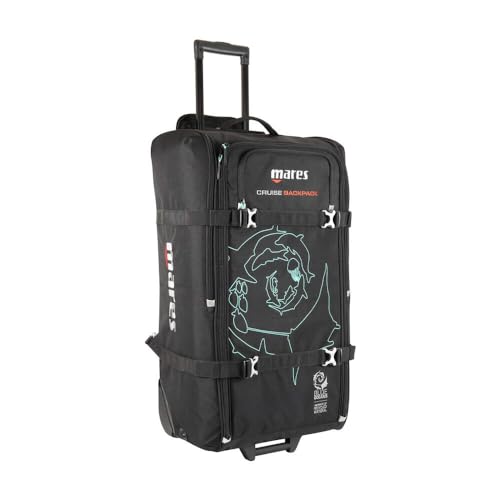
Mares Cruise Backpack Diving Gear Travel Bag 100L
- ✓ Spacious 100L capacity
- ✓ Smooth rolling wheels
- ✓ Comfortable backpack straps
- ✕ Slightly pricey
- ✕ Heavy when fully loaded
| Capacity | 100 liters |
| Material | Durable nylon or polyester with reinforced stitching |
| Wheels | Large, sturdy wheels suitable for various surfaces |
| Carrying Options | Backpack-style padded shoulder straps and telescopic roller handle |
| Drainage System | External fin pockets with integrated drainage holes |
| Compression Straps | Adjustable external straps with ultra-light bicolor buckles |
The moment I swung the Mares Cruise Backpack onto my back, I immediately appreciated its thoughtful design. The padded shoulder straps felt cushy yet supportive, making lugging it over uneven airport floors surprisingly comfortable.
Opening the 100L main compartment, I was impressed by how much gear I could fit inside—spare wetsuits, fins, masks, and even my dive accessories without feeling cramped. The wide-mouth opening made packing and unpacking quick and hassle-free.
The sturdy telescopic handle and large wheels made rolling it through busy terminals a breeze. I didn’t have to worry about pulling a heavy bag over cracks or cobblestones; it glided smoothly every time.
What really stood out was the external fin pocket with drainage. As I stored damp fins, water drained out effortlessly, leaving the bag lighter and preventing any musty smell from building up.
Adjustable compression straps kept my gear compressed and secure, reducing bulk during transit. The bicolor buckles felt durable and added a sleek look, which is a nice bonus.
Overall, this bag feels like a serious upgrade for any diver who wants a mix of capacity, portability, and smart features. It’s perfect for long trips where you need to carry everything in one go without sacrificing ease of movement.
If I had to pick a downside, the price is a bit steep, but the quality and features justify it for frequent travelers.
Mares Cruise Backpack Roller Diving Gear Luggage 128L

- ✓ Lightweight and spacious
- ✓ Versatile roller/backpack
- ✓ Durable and well-organized
- ✕ Pricey
- ✕ Folding adds complexity
| Capacity | 128 liters |
| Dimensions | 18.5 x 12.5 x 32 inches |
| Weight | 6.6 lbs (approximately 3 kg) |
| Material | Durable, lightweight fabric (specific material not specified) |
| Carrying Options | Roller wheels and backpack straps with retractable ergonomic shoulder straps |
| Special Features | Foldable design, dedicated fin pockets with drainage system, integrated front pocket, external compression straps |
The Mares Cruise Backpack Roller Diving Gear Luggage 128L immediately caught my eye with its impressive 128-liter capacity, making it perfect for all my diving essentials. Despite its spacious interior, it remains surprisingly lightweight at just 6.6 lbs, so I didn’t feel bogged down during transit. The bag’s dimensions of 18.5×12.5×32 inches fit comfortably in overhead compartments, which is a huge plus for air travel.
What really stands out is how versatile this bag is—it easily switches between roller and backpack modes thanks to retractable, ergonomic shoulder straps stored in a hidden pocket. The large sturdy wheels made rolling across airport terminals smooth, while the adjustable external compression straps kept everything secure and compact. The dedicated fin pockets with drainage also proved handy after a day of diving, keeping gear organized and dry. When comparing different best scuba diving travel luggage options, this model stands out for its quality.
In the end, the Mares Cruise Backpack Roller seamlessly combines functionality with durability, making it a reliable companion for frequent divers and travelers. Its foldable design allows it to convert into a compact, hand-carry bag in less than a minute, which is perfect for quick trips or storage. For anyone serious about their diving gear, this luggage offers a smart, user-friendly solution that’s built to last.
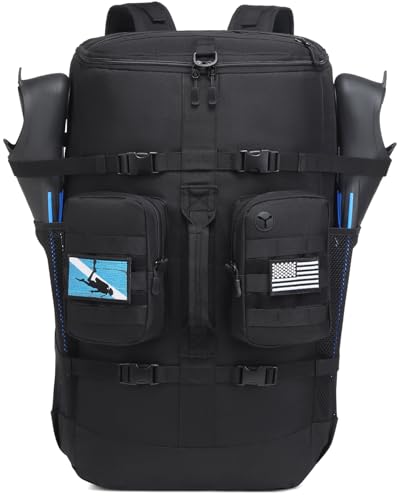
Scuba Diving Backpack 65L for Snorkeling Gear (Black)
- ✓ Large, easy-access capacity
- ✓ Heavy-duty, durable material
- ✓ Comfortable carrying straps
- ✕ No actual gear included
- ✕ Slightly bulky when empty
| Dimensions | 15.7 x 9.8 x 25.2 inches (L x W x H) |
| Material | Heavy-duty 900D nylon |
| Capacity | 65 liters |
| Weight | Not specified (likely around 2-3 kg based on similar backpacks) |
| Carrying System | Padded shoulder straps, back padding, front carry handle |
| Additional Features | MOLLE webbing for customization and extra storage |
Imagine hauling your heavy dive gear through a busy airport, trying not to jostle your fins or scratch your wetsuit. You unzip a giant black bag, revealing a spacious interior that feels almost endless.
That’s exactly what it’s like with this 65L scuba diving backpack from SLINRKE.
The first thing you’ll notice is how roomy it is. At 15.7 inches long and over 9 inches wide, it easily swallows your mask, snorkel, fins, wetsuit, and even your buoyancy control device.
The large U-shaped opening makes loading and unloading a breeze—no more awkwardly stuffing gear in from the top.
The rugged 900D nylon feels super durable, and the reinforced bottom gives you confidence that it won’t fall apart after a few trips. Plus, the padded shoulder straps and back panel make carrying all that gear surprisingly comfortable, even over longer distances.
Storage is well thought out, with a top zip pocket perfect for quick-access items, and two front pockets for sunscreen, dive lights, or your compass. The MOLLE webbing adds a cool, tactical vibe and practical extra hanging space for frequently used tools or patches.
Whether you’re heading straight to the boat, planning a beach weekend, or just want a versatile bag for all water sports, this backpack handles it all. It’s sturdy, spacious, and easy to carry—making your diving adventures less stressful and more enjoyable.
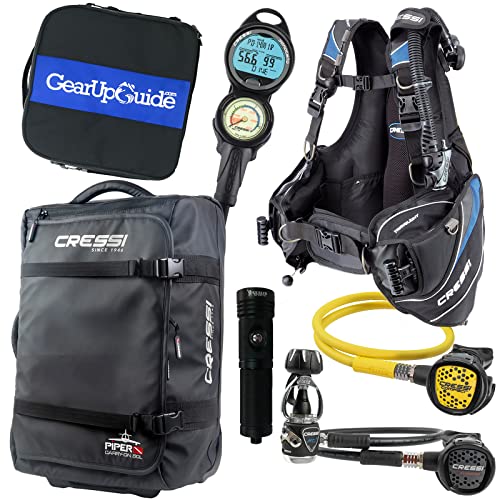
Cressi Travelight 15 LBS Scuba Diving Gear Package Complete
- ✓ Ultra-light and compact
- ✓ Professionally pre-assembled
- ✓ Travel-ready design
- ✕ Pricey
- ✕ Limited color options
| Cressi Travelight BCD Weight Capacity | 20 lbs |
| Cressi MC9 Compact Regulator Set First Stage | Balanced diaphragm design |
| Cressi MC9 Compact Regulator Set Second Stage | Lightweight, compact |
| GupG Regulator Bag Dimensions | Designed to fit standard regulator and dive computer gear |
| Cressi Donatello C2 Dive Computer Display | Backlit LCD with 4 dive modes |
| Overall Package Weight | Approximately 15 lbs (including all gear components) |
The moment I unpacked this Cressi Travelight package, I was immediately struck by how ready-to-go everything was. The fully assembled BCD felt lighter than I expected, especially with its ultra-light 6-pound build, making it a breeze to carry around airport terminals.
The Lock Aid weight system is a game-changer. It securely holds up to 20 pounds but is so streamlined that I barely noticed it when I was swimming or walking to the dive site.
The zippered pockets and D-rings on the BCD add extra convenience for organizing accessories.
The MC9 regulator set is impressively compact yet smooth in operation. I didn’t have to worry about breathing resistance or bulky gear—everything felt balanced and reliable, perfect for quick trips or local dives.
The Donatello C2 dive computer with its backlit display is easy to read underwater, and I loved how lightweight the polycarbonate design was.
Transporting the entire setup was hassle-free thanks to the GupG regulator bag. It kept my regulator and computer protected without adding bulk.
Plus, arriving at the dive site, everything was pre-checked and ready, saving me time and stress.
Overall, this package combines convenience, reliability, and thoughtful design. It’s clearly built for travelers who want professional-grade gear without the bulk.
The only hiccup was that the price is on the higher side, but considering the quality, it’s a solid investment for serious travelers.
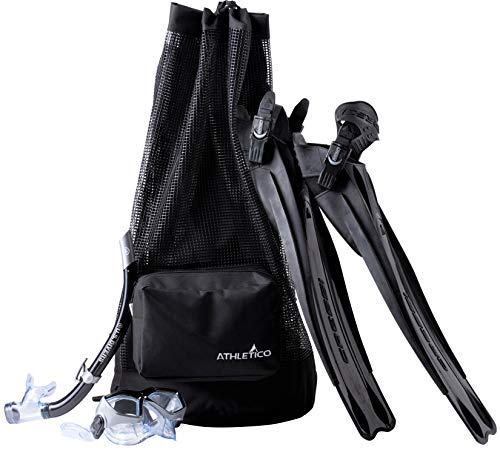
Athletico XL Mesh Dive & Snorkel Gear Bag
- ✓ Spacious and well-ventilated
- ✓ Comfortable to carry
- ✓ Durable construction
- ✕ No dedicated compartments
- ✕ Straps could be longer
| Dimensions | 29 inches x 16 inches x 16 inches |
| Material | 600D Polyester with PVC Coated Mesh |
| Weight Capacity | Suitable to carry fins, wetsuit, BCD, regulator, mask, snorkel, shoes, and more (approximate capacity based on size) |
| Carrying Features | Adjustable padded shoulder straps with sternum strap and integrated whistle |
| Design Features | Breathable PVC Coated Mesh for air drying and water drainage |
| Intended Use | Designed for scuba diving, snorkeling, swimming, surfing, and water sports travel |
The moment I zipped open the Athletico XL Mesh Dive & Snorkel Gear Bag, I was struck by how much room there was. It’s like a portable storage unit for all your diving essentials, yet it doesn’t feel bulky or awkward to carry.
The 29-inch length means I could fit my fins, wetsuit, mask, and even my BCD without cramming everything in.
The mesh design is a game-changer. Not only does it make packing and unpacking easier, but it also allows my gear to breathe.
I rinsed everything right in the bag after a dive, then hung it up to dry—no soggy mess or lingering smell. The PVC coating holds up well against water and rough handling, and the heavy-duty polyester feels sturdy but not overly heavy.
Carrying it is surprisingly comfortable, thanks to the padded, adjustable shoulder straps. The sternum strap helps distribute the weight evenly, which is a real relief after a long day in the water.
Plus, the attached whistle is a thoughtful touch—perfect for safety in busy dive spots or crowded beaches.
Despite its large capacity, it’s lightweight enough to toss in the trunk or overhead on a plane. The open mesh makes it easy to spot what you need quickly, and it’s durable enough to handle travel wear and tear.
Overall, it’s an excellent choice if you want a versatile, roomy, and affordable dive bag that’s ready for adventure.
What Features Make the Best Scuba Diving Travel Luggage?
When selecting the best scuba diving travel luggage, several key features enhance convenience, durability, and functionality.
- Water Resistance: The best scuba diving luggage should be made from materials that are water-resistant or waterproof to protect gear from moisture and saltwater damage. This feature helps ensure that your equipment stays dry during travel, especially when navigating through wet environments or during unexpected weather.
- Durable Construction: Look for luggage that is constructed from high-quality, durable materials such as ballistic nylon or reinforced fabrics. This ensures that the luggage can withstand the rigors of travel, including rough handling at airports or on boats, while protecting the delicate diving equipment inside.
- Spacious Design: Adequate space is crucial for transporting scuba gear, so the luggage should have a roomy interior with compartments or pockets for organizing various items like wetsuits, fins, and tanks. A spacious design allows for efficient packing and easy access to equipment, making your diving experience smoother.
- Wheels and Handles: Luggage with sturdy wheels and comfortable handles can greatly enhance portability. Features like 360-degree spinner wheels allow for easy maneuvering through busy airports or docks, while ergonomic handles reduce strain during transport.
- Weight Considerations: Lightweight luggage is essential for travelers who want to avoid excess baggage fees and make handling easier. Choosing lightweight materials without sacrificing durability ensures that you can pack more gear without exceeding airline weight limits.
- Security Features: Look for luggage with built-in locks or the ability to attach a lock to zippers for added security. This helps protect valuable diving equipment from theft during transit and provides peace of mind while traveling.
- Versatile Size: The best scuba diving luggage should come in sizes that are suitable for both short trips and longer expeditions. A versatile size allows divers to choose the right bag depending on their travel needs, whether it’s a carry-on for a weekend getaway or a larger bag for extended diving trips.
- Easy Clean Design: Since diving gear can be wet and sandy, luggage that is easy to clean is a significant advantage. Materials that can be wiped down or hosed off help maintain the luggage’s appearance and hygiene over time.
How Important is Durability in Scuba Diving Bags?
Durability is a crucial factor when selecting the best scuba diving travel luggage, as it ensures protection and longevity for your gear.
- Material Quality: The material of the scuba diving bag plays a vital role in its durability. High-denier nylon or polyester fabrics are commonly used for their resistance to abrasions and tears, protecting your gear from rough handling and environmental factors.
- Water Resistance: A durable scuba diving bag should be water-resistant or waterproof to safeguard your equipment from moisture and saltwater. This is essential, as exposure to water can lead to mold, corrosion, and damage to sensitive equipment, impacting performance and safety.
- Reinforced Stitching: Bags with reinforced stitching are much less likely to experience seams tearing under stress. This feature is essential for maintaining the integrity of the bag, especially when packed with heavy dive gear, ensuring that it can withstand the rigors of travel.
- Robust Zippers and Closures: High-quality zippers and closures are critical components of a durable diving bag. They should be corrosion-resistant and designed to endure frequent use, preventing failures that could expose your gear to the elements during transport.
- Impact Resistance: A scuba diving bag with a hard shell or impact-resistant features offers added protection against accidental drops or bumps. This feature is particularly important for protecting fragile equipment like dive computers and cameras, ensuring they remain intact during travel.
Why Should Weight Considerations Matter for Divers?
Weight considerations matter for divers because scuba equipment is inherently heavy, and excess weight can lead to physical strain and increased costs when traveling.
According to the Diver’s Alert Network, scuba diving gear can weigh between 30 to 50 pounds or more, depending on the type and amount of equipment used. Excess baggage fees from airlines can quickly add up, and divers may find themselves limited on the amount of gear they can take if they exceed weight limits, leading to a less optimal diving experience (DAN, 2021).
The underlying mechanism involves both the physical demands of carrying heavy equipment and the logistical constraints of travel. When divers pack too much weight, they risk fatigue, which can affect their performance and safety during dives. Additionally, heavy luggage can lead to injuries if not properly managed, as divers may struggle with lifting and maneuvering their bags. Moreover, weight distribution in travel luggage is crucial; imbalanced bags can lead to difficulty in handling, especially in crowded airports or on boats. Thus, understanding how to select and optimize scuba diving travel luggage can significantly enhance a diver’s experience.
How Do Storage Options Impact Your Scuba Diving Gear?
The storage options you choose can greatly impact the convenience, protection, and organization of your scuba diving gear while traveling.
- Hard-shell dive bags: These bags provide maximum protection for your scuba gear, especially delicate items like regulators and cameras.
- Soft-sided dive bags: Lightweight and flexible, soft-sided bags are easier to pack and transport, but may not offer as much protection against rough handling.
- Backpacks: Ideal for divers who prefer a hands-free option, backpacks can be convenient for carrying essential gear while traveling.
- Wheeled luggage: This type of luggage is perfect for divers who have heavy gear, as it allows for easy transport through airports and other travel venues.
- Mesh bags: Great for rinsing and drying your gear post-dive, mesh bags are lightweight and allow for airflow, preventing mildew.
Hard-shell dive bags: These bags are designed to withstand rough handling and protect your gear from impacts and environmental elements. They often come with customizable compartments to keep your equipment organized and secure during travel.
Soft-sided dive bags: Made from durable fabrics, soft-sided bags are more adaptable and can fit into tight spaces, making them ideal for travel. However, they may not shield your gear from heavy impacts and should be used with care when packing fragile equipment.
Backpacks: Backpacks designed for scuba diving often come with padded compartments and straps for comfort, making it easy to carry your gear over long distances. They are especially useful for divers who need to navigate through busy airports or travel on foot.
Wheeled luggage: This option significantly reduces the physical strain of transporting heavy diving gear, as you can simply roll the bag along. Many wheeled bags are also designed with multiple compartments for easy organization, allowing quick access to essential items.
Mesh bags: These bags are particularly useful for rinsing scuba gear after dives, as they allow water to drain and air to circulate, minimizing the risk of mildew. They are lightweight and can easily be packed away when not in use, making them a practical addition to any dive travel setup.
What Are the Different Types of Travel Luggage for Scuba Divers?
The best scuba diving travel luggage types are designed to accommodate the unique needs of divers while ensuring their gear is protected during transit.
- Rolling Dive Bags: These bags are equipped with wheels and a retractable handle, making them easy to transport through airports and other travel venues.
- Backpacks: Dive backpacks are designed for easy carrying, often featuring padded straps and compartments specifically for dive gear.
- Hard-Shell Cases: These cases provide maximum protection for delicate equipment, typically made from durable materials that can withstand impact and rough handling.
- Mesh Dive Bags: Mesh bags are lightweight and breathable, ideal for storing wet gear after a dive, allowing for quick drying while minimizing odors.
- Dry Bags: Dry bags are waterproof and designed to keep gear dry in wet conditions, making them ideal for boat dives or rainy climates.
Rolling dive bags offer convenience for divers who have a lot of gear to transport, with their sturdy construction ensuring that equipment remains secure during travel. They often come with various compartments to help organize items such as wetsuits, fins, and masks, making it easy to find what you need quickly.
Backpacks are a favorite among divers who prefer a hands-free option, allowing them to easily navigate crowded areas while keeping their hands free. Many of these backpacks include specialized pockets for dive gear, hydration systems, and even integrated support for carrying heavier items comfortably.
Hard-shell cases are essential for divers who own expensive or fragile equipment, such as cameras or regulators. These cases are often equipped with foam inserts that can be customized to fit gear precisely, providing extra layers of protection against shocks and drops during transit.
Mesh dive bags are particularly useful for divers who frequently dive in tropical locations, as they allow water to drain and air to circulate, preventing mildew. Their lightweight design makes them easy to carry along with other luggage, and they are perfect for storing fins, masks, and other accessories after diving.
Dry bags are indispensable for divers who might encounter wet conditions while traveling. Whether it’s during a boat trip or unexpected rain, these bags keep gear dry and protected, allowing divers to focus on their adventures without worrying about water damage to their equipment.
How Do Soft-Sided Bags and Hard-Shell Cases Differ?
The main differences between soft-sided bags and hard-shell cases for scuba diving travel luggage are their structure, durability, and functionality.
- Soft-Sided Bags: These bags are typically made from fabric materials like nylon or polyester, allowing for a lightweight and flexible option.
- Hard-Shell Cases: Constructed from rigid materials such as polycarbonate or ABS plastic, these cases offer enhanced protection for delicate equipment.
Soft-sided bags are advantageous for their versatility and ease of storage, as they can be compressed and packed into smaller spaces when empty. They often come with multiple pockets for organization and are generally lighter, which helps when adhering to airline weight limits.
On the other hand, hard-shell cases provide superior protection against impacts, moisture, and the elements, making them ideal for safeguarding expensive scuba gear during travel. They usually feature locking mechanisms for added security and are designed to withstand rough handling, ensuring that your equipment remains safe and undamaged.
In What Situations are Wheeled Bags More Beneficial?
Wheeled bags are particularly beneficial in a variety of travel situations, especially when it comes to transporting scuba diving gear.
- Airports and Train Stations: Wheeled bags are ideal for navigating busy terminals where you may need to maneuver through crowds and transport your gear over long distances.
- Urban Environments: In cities with paved sidewalks and public transport, wheeled bags allow for easy transit between locations without straining your back.
- Heavy Packing Situations: When scuba diving trips require carrying bulky equipment, wheeled bags help manage the weight more comfortably than traditional backpacks or duffels.
- Frequent Moves: For divers who need to change locations often, such as moving from one dive site to another, wheeled bags simplify the process of loading and unloading gear.
- Accessibility Needs: For travelers with mobility challenges or those carrying additional items, wheeled bags provide a practical solution that reduces the physical strain of carrying heavy loads.
In airports and train stations, wheeled bags make it easier to transport your scuba gear, especially when dealing with check-in lines or boarding gates that require a bit of walking. The ability to roll a bag rather than carry it can save energy for the actual diving experience.
In urban environments, wheeled bags excel on smooth surfaces, allowing you to navigate through busy streets and access public transportation without difficulty. This convenience can make a significant difference when you need to hop on a bus or train with your gear.
When packing for a scuba diving trip, you often need to bring along heavy and bulky equipment such as tanks and wetsuits. Wheeled bags are designed to handle such loads, providing better weight distribution and making it easier to transport without risking injury.
For divers who frequently change locations, wheeled bags facilitate quick and efficient packing and unpacking. They allow you to easily transition between different dive sites or accommodations, ensuring you can focus on the diving experience rather than the logistics of travel.
Accessibility needs are also a crucial consideration; wheeled bags can greatly assist travelers who may have difficulty lifting or carrying heavy items. By offering a way to roll rather than carry, these bags make travel more inclusive and manageable for everyone.